Bathrooms
A bathroom can look bright from the doorway and still feel awkward when you stand at the mirror. Before choosing a decorative fixture, write down where the lighting falls short and what you need to do there. That gives the renovation conversation a practical starting point.
For homeowners in Townsend and nearby Delaware communities, a lighting brief can be part of a larger remodel or a discussion about a smaller improvement. Our bathroom renovation planning guide covers the room as a whole. Here, the focus is on the decisions to make before fixtures are ordered.
1. Observe the room at the times you use it
Look at the bathroom during your morning routine and again after dark. Stand where you normally shave, apply makeup, or check your appearance. Note shadows, reflections, or a light that feels uncomfortable to look toward. Ask other household members to do the same; their position at the mirror may be different from yours.
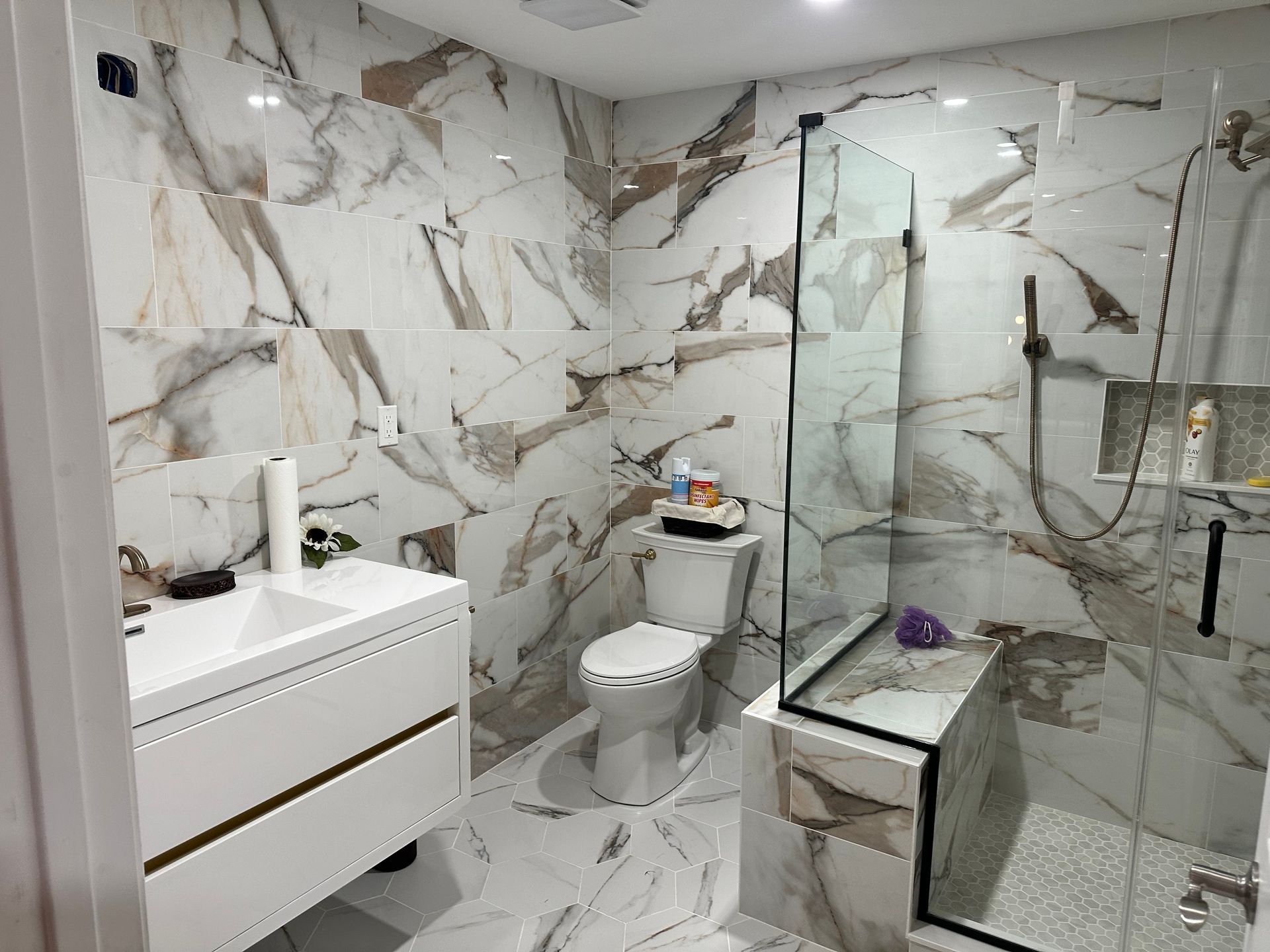
Take one photo from the doorway and another showing the mirror, vanity, and existing lights together. Add a sentence to each photo explaining the problem. “The left side of the mirror feels dim after sunset” is more useful than a general request for a brighter bathroom.
2. Give each light a job
Separate the conversation into general room lighting, lighting for tasks at the mirror, and any softer light you would like for evening use. These are planning categories, not a requirement to buy three kinds of fixtures. Ask which needs the existing setup can meet and which would call for a change.
Discuss the mirror and vanity alongside the lights. Share the proposed mirror's size, whether it includes lighting, and whether a medicine-cabinet door opens into the space beside it. A fixture that looks right in a product photo still needs to work with the actual wall, cabinets, and people using the room.
3. Compare brightness and color separately
When comparing bulbs, lumens describe light output; watts describe electrical power use. Color temperature, expressed in kelvins, describes whether the light appears warmer or cooler. Lower kelvin values look warmer, while higher values look cooler. These are different choices: a cooler-looking bulb is not automatically a brighter one. The Department of Energy's consumer lighting guide explains both measurements and the Lighting Facts label.
Bring tile, paint, and vanity samples into the discussion. If possible, compare your preferred light appearance with those materials before making the final selection. Record the actual product specification instead of relying only on descriptions such as “warm” or “daylight.” Avoid choosing a whole-room brightness target from a photo of someone else's bathroom.
4. Plan how the lights will be controlled
Describe what you want to happen when you enter the room. Do you want the mirror light and general lighting to operate together? Would you prefer a lower level in the evening? Is the current switch easy for everyone in the household to reach and understand?
If you want dimming, confirm that the proposed bulbs or fixtures support it and that the selected dimmer is compatible. DOE's light-bulb buyer guidance specifically calls for checking dimming capability and compatibility. Ask for the exact model combination in the proposal, including how it behaves at the lower settings.
5. Confirm the installation details before buying
Have the contractor and a qualified electrician review the proposed locations, existing wiring, fixture suitability for the bathroom location, and any required approvals. Discuss lights near the tub or shower specifically rather than assuming a fixture labeled for bathrooms works everywhere in the room.
Ask what the work includes beyond the visible fixture: moving a connection point, changing controls, opening a wall, and repairing or painting the affected surface. Confirm who supplies each item and whether bulbs are included or the fixture has an integrated light source. These details make estimates easier to compare.
Your bathroom lighting brief
A useful brief fits on one page. Bring:
- Photos of the room and a short description of the current lighting problems.
- Mirror and vanity dimensions, with product information for anything already selected.
- The routines the lighting needs to support, including evening preferences.
- Fixture ideas and light-appearance preferences, clearly marked as options.
- Questions about controls, installation, wall repairs, and who supplies materials.
NexGen Property Care is based in Townsend, Delaware. Explore our bathroom renovation services, then request a free estimate with your priorities, preferred timing, and property's town. Share your location so we can confirm project availability.